





Jug Tavern Squares Events:

Calendar

List of Events
Square Dancing Is Friendship Set To Music!

Where Good Time Music & New Friends Come Together!
Square Dance Lessons
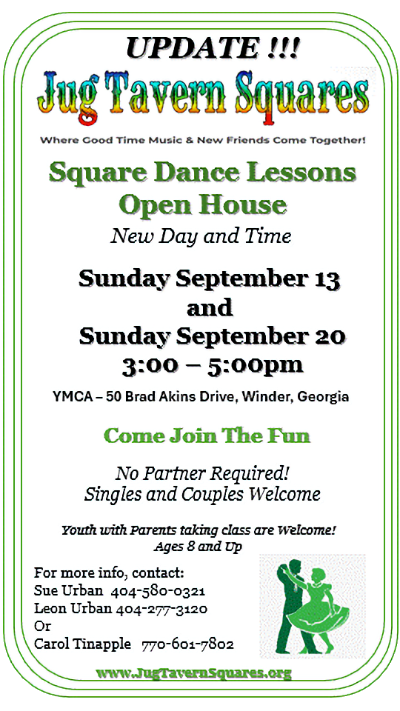
Jug Tavern Squares Invites You To Join The Fun Of Square Dancing!
 If you can walk, you can Square Dance. Square Dance “callers” tell you what steps to take and what moves to make in your “Square” of eight dancers. We’ll show you how!
 The first two lesson weeks are FREE!… after that, a club donation is requested. We need to pay the caller/instructor.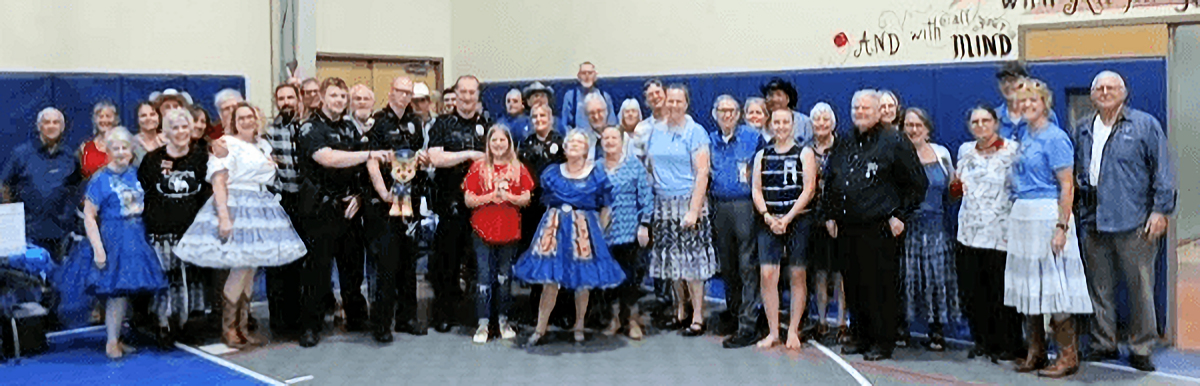
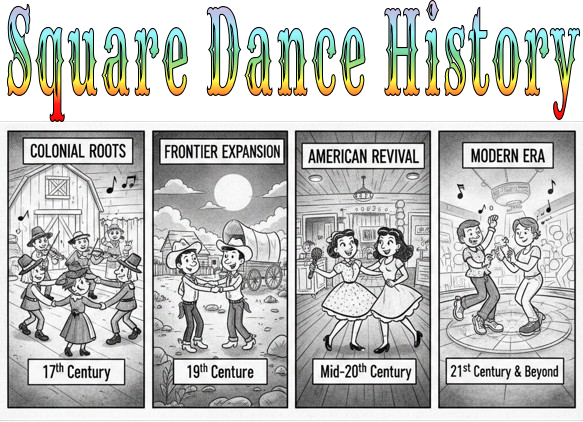
Square dancing in America, evolving into forms like those seen in clubs such as Jug Tavern Squares, has deep roots in European folk dances brought by settlers, specifically in the combination of English country dances and French quadrilles. It became a staple of 19th-century American social life, transitioning from rural, informal gatherings to a structured, popular activity influenced by educators like Lloyd Shaw and popularizer Henry Ford in the 1920s-30s. Post-World War II, it evolved into Modern Western Square Dance, characterized by professional callers, recorded music, and choreographed, complex figures, often performed in clubs
Multipurpose Business Child Theme for Divi
Using the Molti Multipurpose Child Theme, you can set up any kind of Website whether It’s Consulting, Agency, Renovation or Plumber, and many more. It’s ready for everything with Its Modern and Fantastic Design and Functionalities. So Take it for Spin!

Where you can Buy:

From our Official Site

From Divi Marketplace
15+
Page Designs
6
Footer Designs
6
Header Designs
50+
Element Designs
Jug Tavern Squares
Fun For The Entire Family!
Modern western square dance, which is also called western square dance, contemporary western square dance, or modern American square dance, evolved from the western style of traditional square dance.
Since the 1970s, modern western square dance has been promoted and standardized by Callerlab, the International Association of Square Dance Callers.
History History History
Origins and Evolution
Square dancing, rooted in 17th-century European folk traditions such as the French quadrille and English Morris dance, evolved in America into a popular social activity.
Influenced by African-American musicians who popularized “calling,” the dance spread through rural communities and was later promoted by Henry Ford in the 1920s to encourage traditional values.

View The JTS Event Calendar
Join Us At Out Next Square Dance!

View The JTS Event List
Plan To Attend A Future Event!

View The JTS Testimonials
What New Members Have To Say!

Jug Tavern Squares meets at the YMCA
Jug Tavern Squares
C/O YMCA Brad Akins Branch
50 Brad Akins Drive
Winder, GA. 30680
© Copyright 2026 Jug Tavern Squares - Made with ❤ by Affordable Webcrafters